
Teardowns down to a clean lot
House Demolition in Seattle, WA
From the asbestos survey to the last load of fill, one schedule for taking the whole house down.
- Free walkthrough and an itemized written estimate
- Permit, asbestos notice and side sewer steps planned before work starts
- Debris sorted for salvage and recycling, not just dumped
Taking a Whole House Down
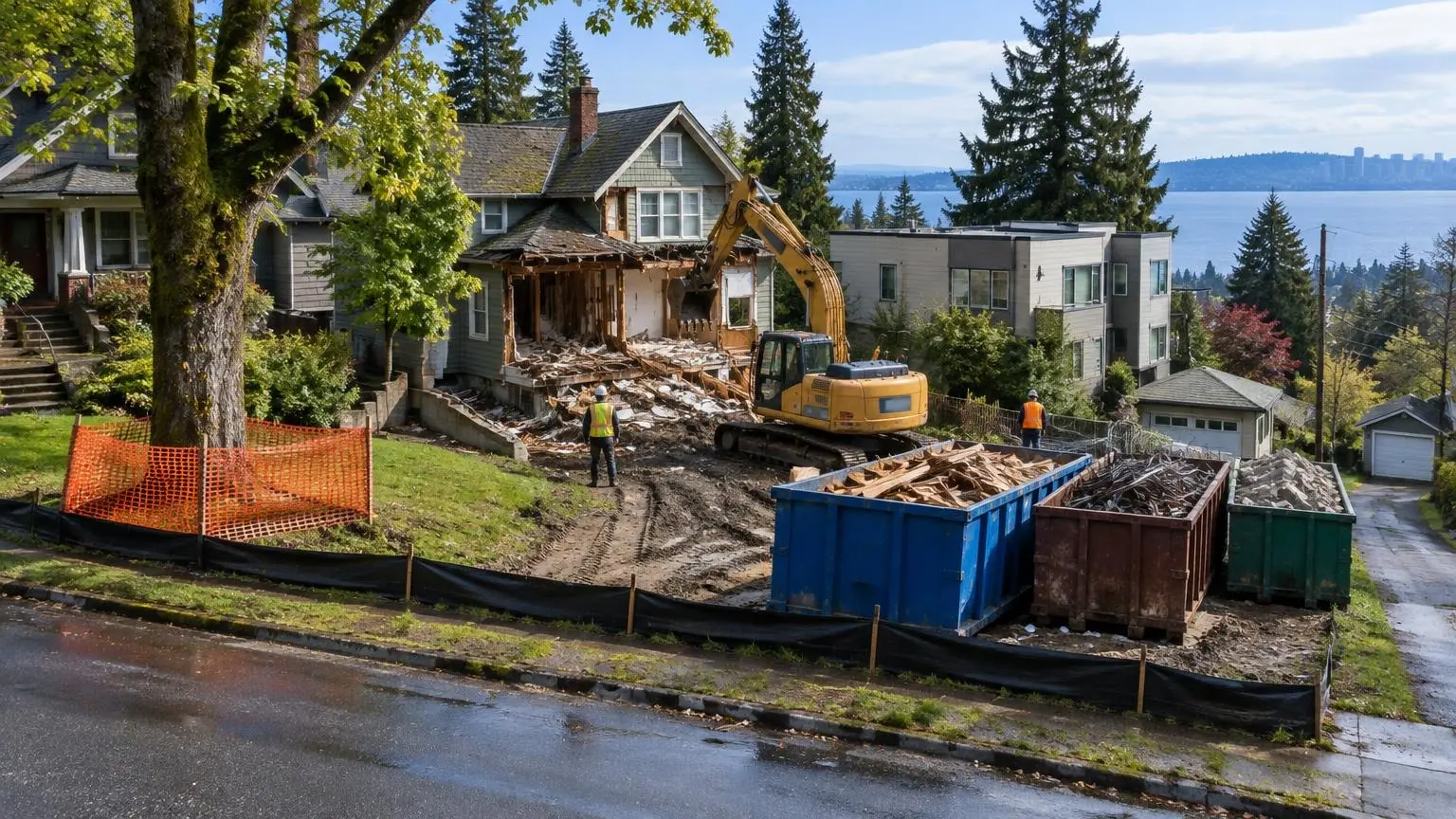
House demolition in Seattle is usually the first step of a rebuild: an owner or builder has plans for a new home or townhouses, and the old house has to go. Sometimes the house is past saving after a fire, rot or years of being empty. Either way, the job is the same in outline. The house is surveyed, emptied of anything hazardous, disconnected from every utility, taken apart by machine, and its foundation, basement walls and slab are removed to the depth the next project needs.
Seattle's housing makes this more involved
Point2Homes' summary of Census data puts Seattle's median build year at 1976, and close to 23 percent of homes were built in 1939 or earlier. Older houses here often have full or partial basements, concrete foundation walls, plaster over lath, and a layered history of remodels. Each of those affects the work. A basement means more concrete to break out and a bigger hole to backfill. Old flooring, duct wrap, siding or pipe insulation may contain asbestos, which the survey will find. Paint on a pre-1978 house may contain lead.
The order of operations
1. Asbestos survey. An AHERA-certified inspector samples suspect materials. The Puget Sound Clean Air Agency requires this before demolition of any structure with more than 120 square feet of roof area. 2. Notice and abatement. The Asbestos/Demolition Notification is filed with a fee. Friable asbestos is removed by an abatement crew. The house cannot come down until 10 days after filing. 3. Rat abatement. SDCI requires at least 15 days by a licensed pest control company immediately before work starts. 4. Shutoffs. Seattle City Light, Seattle Public Utilities and Puget Sound Energy terminate service, and the side sewer is capped under its own permit. 5. Permit. SDCI issues the demolition permit, which is posted on site with the approved plans. 6. Tear-down. Salvage first, then the house comes down in sections, with material sorted as it is loaded. 7. Foundation and grading. Footings, walls and slab come out, the hole is backfilled and compacted, and the lot is graded with erosion control left in place.
Rental and occupied houses
Seattle limits when housing can be torn down. SDCI's page on demolition of housing lists the criteria, and a house must meet one of them. Common ones are that the house is owner occupied, has not been rented in the last six months, or already has a permit issued for the new building on the site. Others cover relocation of the structure, an SDCI order declaring it unfit, and residential deconstruction under Director's Rule 4-2009. If the house has tenants, the Tenant Relocation Assistance Ordinance may apply. We ask about this at the first visit, because it can decide when the permit can be issued at all.
Slopes, trees and neighbors
On a steep lot, SDCI may want a topographic survey and a geotechnical report before intake, and excavation near a property line may need shoring under a separate permit. Trees that stay must be protected inside a fenced area figured at one foot of radius per inch of trunk diameter. We plan the equipment path around those limits and keep dust down with water while the house is being loaded out.
Partial basement or full removal?
If you are rebuilding, the builder's plans decide how much foundation comes out. SDCI's quicker subject-to-field-inspection route allows foundations removed to no more than four feet deep, or, for single-family and duplex lots, leaving one-story basement walls and slab in place. Removing everything costs more but gives the next crew a clean start. We price both when the choice is open.
What a Teardown Includes
Each of these is a line on the estimate, so you can see where the money goes.
Pre-demolition coordination
Asbestos survey, clean air notice, rat abatement, utility shutoffs and side sewer cap scheduled in order.
Salvage pull
Fixtures, doors, cabinets and usable lumber removed before the machine starts.
Structure removal
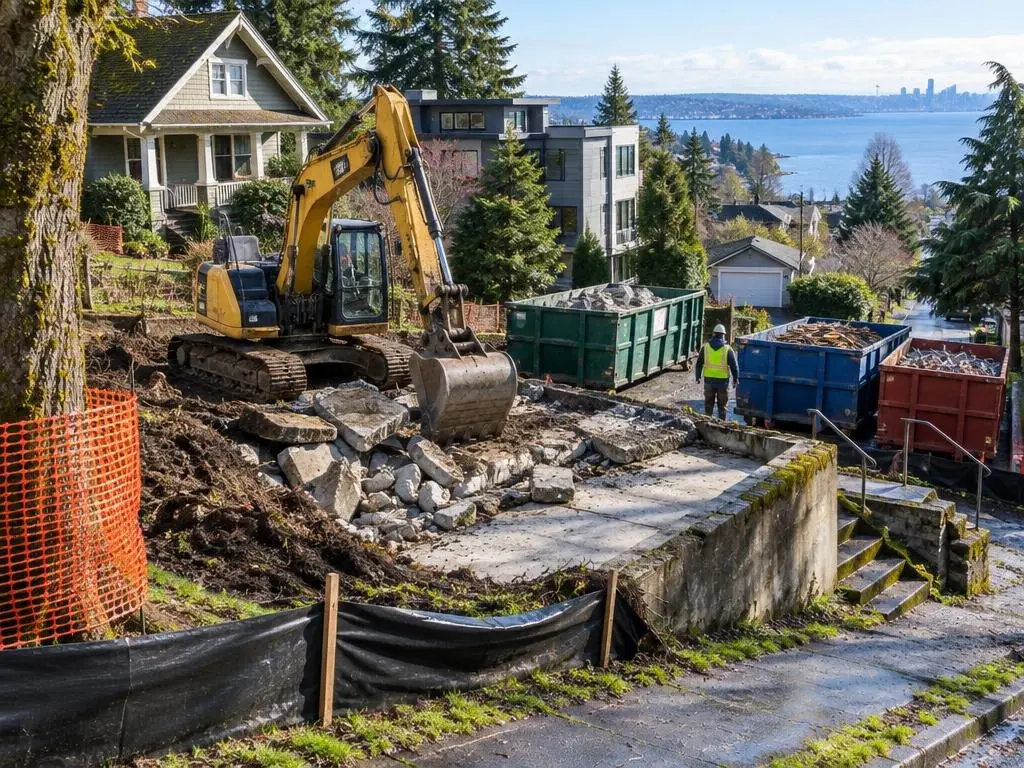
The house taken down in sections, with wood, metal and mixed debris loaded separately.
Foundation and basement
Footings, walls and slab broken out to the depth your rebuild plan calls for.
Backfill and grade
Hole filled and compacted, lot graded, erosion control left in place.
Diversion records
Hauler tickets and weights kept for Seattle's waste diversion report.
Typical House Demolition Costs
| Item | Published range |
|---|---|
| Mechanical demolition, per sq ft | $5 to $10 |
| 1,000 sq ft house | $5,000 to $10,000 |
| 1,500 sq ft house | $7,500 to $15,000 |
| 2,000 sq ft house | $10,000 to $20,000 |
| 2,500 sq ft house | $12,500 to $25,000 |
| Basement removal | $5,000 to $25,000 |
| Asbestos inspection and testing | About $500 |
| Demolition with asbestos removal, per sq ft | $10 to $30 |
Figures from Fixr's house demolition cost guide (national averages, updated January 2025). Seattle permit fees follow SDCI's own fee schedule. Size, basement, access, slope and abatement all change the total. Your written estimate is the price.
How It Works
1. Walkthrough
We measure the house, check access, slope and trees, and write the estimate.
2. Survey and notices
Asbestos survey, 10-day clean air notice, rat abatement and utility shutoffs.
3. Permit and tear-down
SDCI permit posted, salvage pulled, house taken down and sorted.
4. Foundation and finish
Foundation removed, hole backfilled, lot graded and stabilized.
Why Choose Us for House Demolition
No surprises at intake
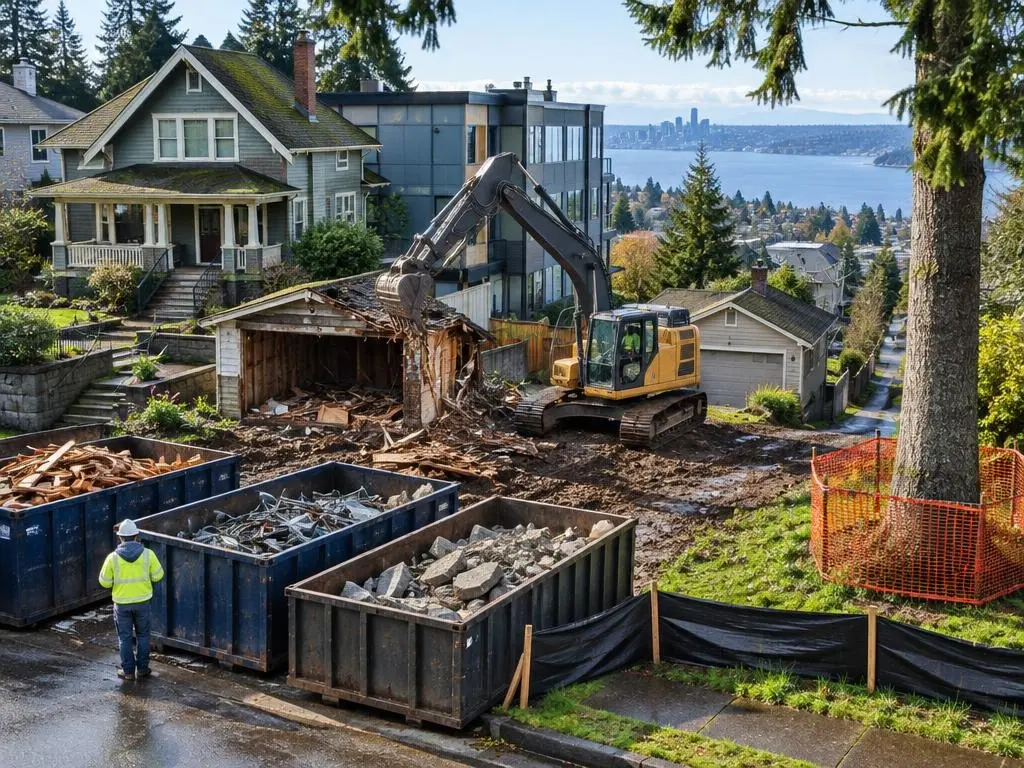
We check the housing demolition criteria and slope rules before you apply.
Foundation priced both ways
Partial and full removal side by side when your plans allow either.
House Demolition Questions
How long does a house demolition take once permits are in hand?
The tear-down itself on a typical single-family house is usually a matter of days, not weeks, though basements, steep access and abatement add time. The longer part is before that: the 10-day asbestos notice, 15 days of rat abatement and SDCI review.
Who files the asbestos notice?
The Puget Sound Clean Air Agency puts the survey duty on the property owner or the owner's agent, and the notice and fee must be filed before demolition. We coordinate both and keep a copy of the survey on site as the agency requires.
Do I have to cap the sewer myself?
No, but it has to be done under a side sewer permit before demolition. SDCI's next-steps sheet points to the Drainage and Sewer Review Desk at (206) 684-5362 for that permit, and we schedule it with the other shutoffs.
Can the demolition permit be issued before my new house permit?
Sometimes. If the house is owner occupied or has not been rented in six months, it may qualify on its own. Otherwise SDCI may hold the demolition permit until the new building permit is issued.
House Demolition Service Areas
- Demolition Contractors in Seattle, WA
- Demolition Contractors in Bellevue, WA
- Demolition Contractors in Redmond, WA
- Demolition Contractors in Kirkland, WA
- Demolition Contractors in Renton, WA
- Demolition Contractors in Kent, WA
- Demolition Contractors in Federal Way, WA
- Demolition Contractors in Shoreline, WA
- Demolition Contractors in Burien, WA
- Demolition Contractors in Lynnwood, WA
- Demolition Contractors in Edmonds, WA
- Demolition Contractors in Bothell, WA
- Demolition Contractors in Sammamish, WA
- Demolition Contractors in Issaquah, WA
- Demolition Contractors in Auburn, WA
- Demolition Contractors in Mercer Island, WA
- Demolition Contractors in Tukwila, WA
- Demolition Contractors in SeaTac, WA
- Demolition Contractors in Des Moines, WA
- Demolition Contractors in Mountlake Terrace, WA
- Demolition Contractors in Lake Forest Park, WA
- Demolition Contractors in Kenmore, WA
- Demolition Contractors in Woodinville, WA
- Demolition Contractors in Newcastle, WA
- Demolition Contractors in Mukilteo, WA
- Demolition Contractors in Everett, WA
Get a House Demolition Estimate
Free walkthrough and written teardown estimate anywhere in Seattle.