
Take it apart, keep what is worth keeping
Deconstruction & Salvage in Seattle, WA
A slower, reuse-first teardown that keeps old-growth lumber, doors and fixtures out of the landfill.
- Free walkthrough and an itemized written estimate
- Permit, asbestos notice and side sewer steps planned before work starts
- Debris sorted for salvage and recycling, not just dumped
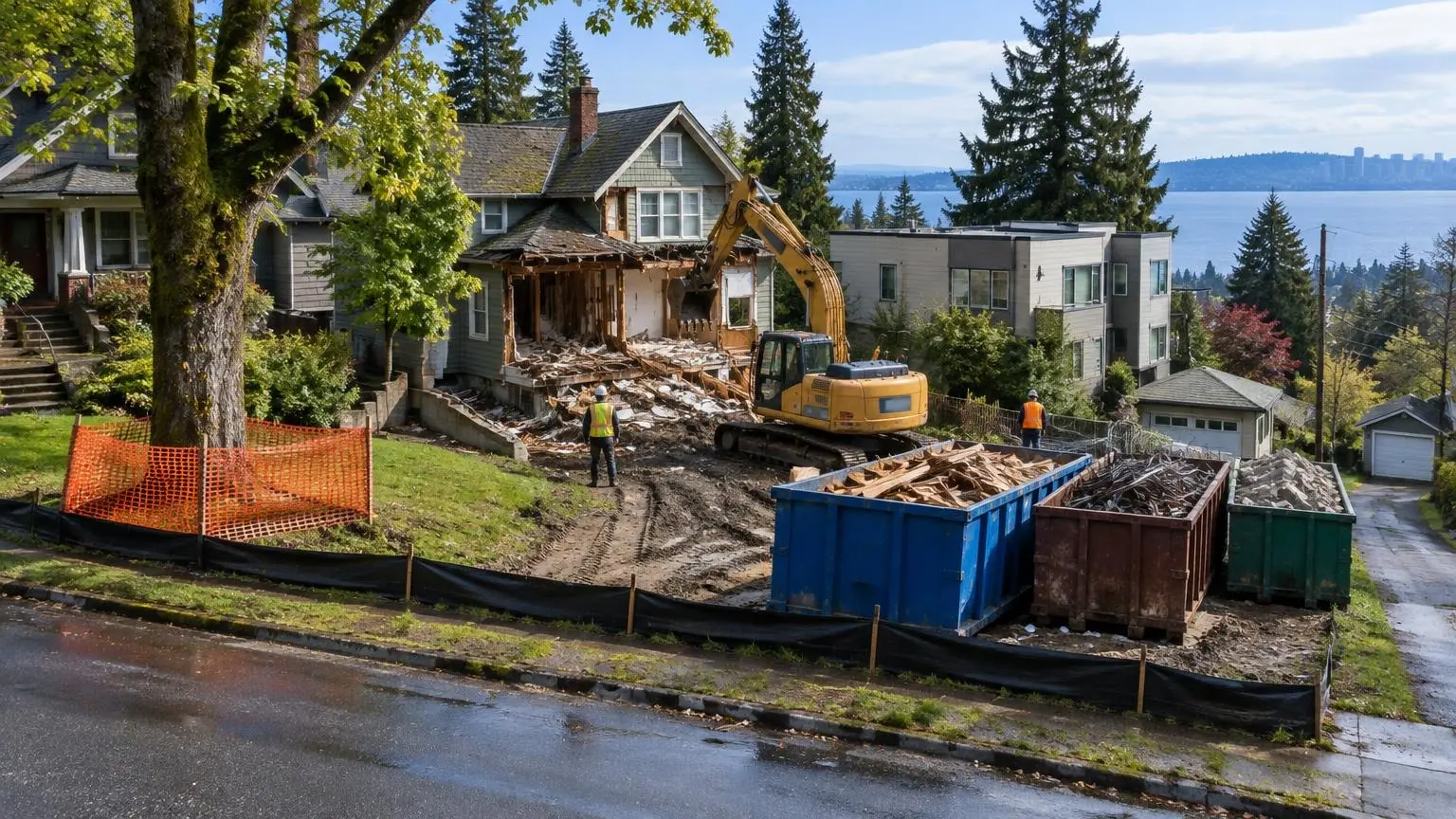
Taking a Building Apart Instead of Knocking It Down
Deconstruction and salvage means removing a building in roughly the reverse order it was built, so its materials come out whole. Fixtures, cabinets, doors, windows and hardware come out first, then trim, flooring, siding, roofing and finally the framing. It suits Seattle well. With nearly 23 percent of the city's homes built in 1939 or earlier, per Point2Homes' Census summary, many teardowns contain old-growth fir framing, hardwood floors and solid doors that people want, and the city expects demolition debris to be recovered.
Where Seattle's rules come in
SDCI requires a salvage assessment for every project that includes demolition, so every owner is asked what in the building could be reused. For projects over 750 square feet, a waste diversion report goes to Seattle Public Utilities within 60 days of final inspection, listing each material, how much there was, who hauled it and where it went for reuse, recycling or disposal. SDCI also notes that if you want to deconstruct rather than demolish, you may be able to get a deconstruction permit before the building permit is issued, and its housing demolition rules list residential deconstruction under Director's Rule 4-2009 as one of the ways a house can qualify for removal.
Full deconstruction or salvage-first demolition?
There are two ways to do this, and the right one depends on the building and your budget.
- Full deconstruction. The building is taken apart piece by piece. It takes longer and costs more in labor, but recovers the most material.
- Salvage, then demolish. The valuable, easy-to-remove items come out first, then the rest of the structure is taken down by machine and sorted. This is faster and still keeps a good share out of the landfill.
Fixr's national figures show the trade-off: $7,500 to $15,000 for mechanical demolition of a 1,500-square-foot house, against $10,000 to $50,000 to deconstruct the same house.
What is usually worth saving
- Dimensional lumber and beams, especially old-growth fir
- Hardwood flooring that can be pulled without splitting
- Solid wood doors, trim and built-in cabinets
- Windows, light fixtures, sinks, tubs and hardware
- Brick from chimneys, cleaned for reuse
Material must be tested before it is salvaged. Painted wood in a pre-1978 house may carry lead paint, and the asbestos survey required by the Puget Sound Clean Air Agency identifies materials that cannot be reused.
The paper trail
Deconstruction makes the diversion report easier because the materials are separated from the start. We keep the hauler tickets, weights and destinations with the job file and hand them over at the end, so the report to Seattle Public Utilities reflects what actually happened.
What Deconstruction Includes
Each step keeps material separated so it can be reused or recycled.
Salvage assessment
A walk through the building to list what can be reused before the permit is filed.
Fixture and finish removal
Cabinets, doors, windows, lighting and flooring pulled intact.
Hand take-down
Roofing, siding and framing removed in reverse order of construction.
Material sorting
Reusable lumber stacked and denailed; metal, wood and concrete sent to recyclers.
Diversion records
Weights, haulers and destinations recorded for the SPU waste diversion report.
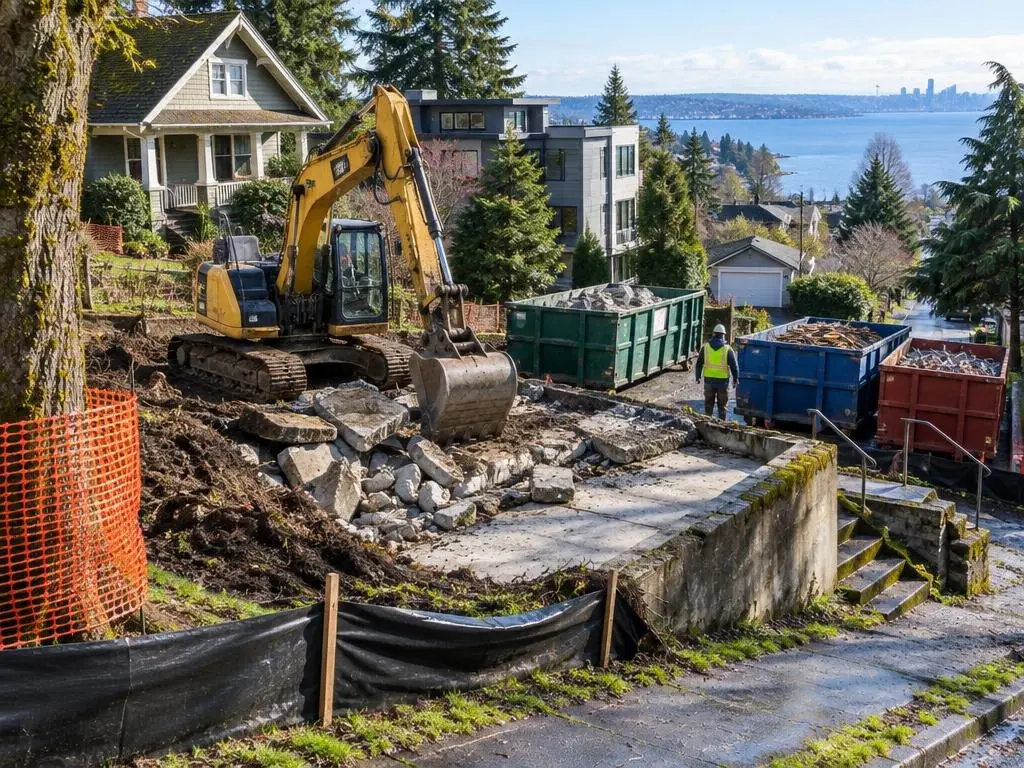
Typical Deconstruction Costs
| Item | Published range |
|---|---|
| Deconstruction, 1,500 sq ft house | $10,000 to $50,000 |
| Mechanical demolition, 1,500 sq ft house (for comparison) | $7,500 to $15,000 |
| Partial demolition | $1,000 to $20,000 |
| Cleanup and removal included in a project | $300 to $2,000 |
| Debris removal, per truckload | $400 to $800 |
Figures from Fixr's house demolition cost guide (national averages, updated January 2025). The value of salvaged material, the building's size and condition and the amount saved all change the total. Your written estimate is the price.
How It Works
1. Salvage walk
We list what can be saved and price full deconstruction against salvage-then-demolish.
2. Testing and notices
Asbestos survey and lead checks before anything is pulled for reuse.
3. Take-down
Fixtures, finishes and framing removed and sorted.
4. Records
Hauler tickets and destinations collected for your diversion report.
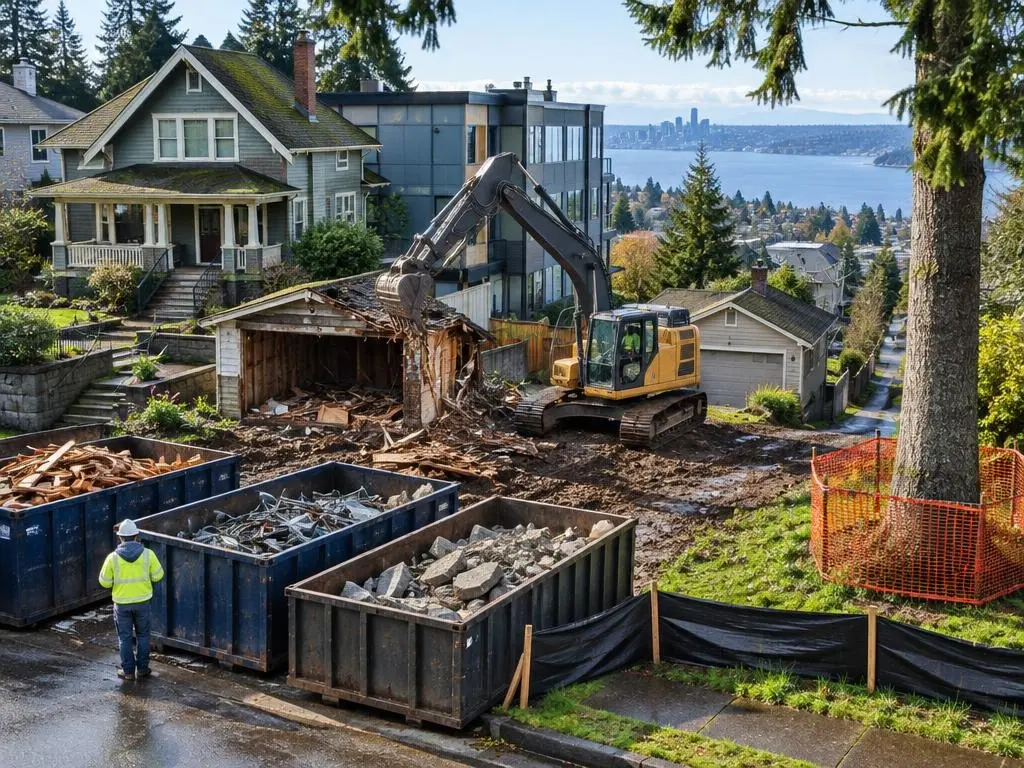
Why Choose Us for Deconstruction & Salvage
Both options priced
Full deconstruction and salvage-first demolition side by side.
Records kept
Everything you need for the SPU diversion report, from the start.
Deconstruction & Salvage Questions
Is deconstruction required in Seattle?
A full deconstruction is not required for most projects, but SDCI requires a salvage assessment for every project that includes demolition, and projects over 750 square feet must report how their waste was diverted.
Does deconstruction take longer than demolition?
Yes. Taking a house apart by hand takes much longer than machine demolition. Salvage-first demolition is a middle ground that saves the most valuable items in a short time.
Can I keep some of the materials?
Yes. Tell us what you want to keep, such as a mantel, doors or flooring, and we will remove it carefully and set it aside.
Can painted wood be reused?
It depends on testing. Lead paint is common in houses built before 1978, so painted material is checked before it is reused.
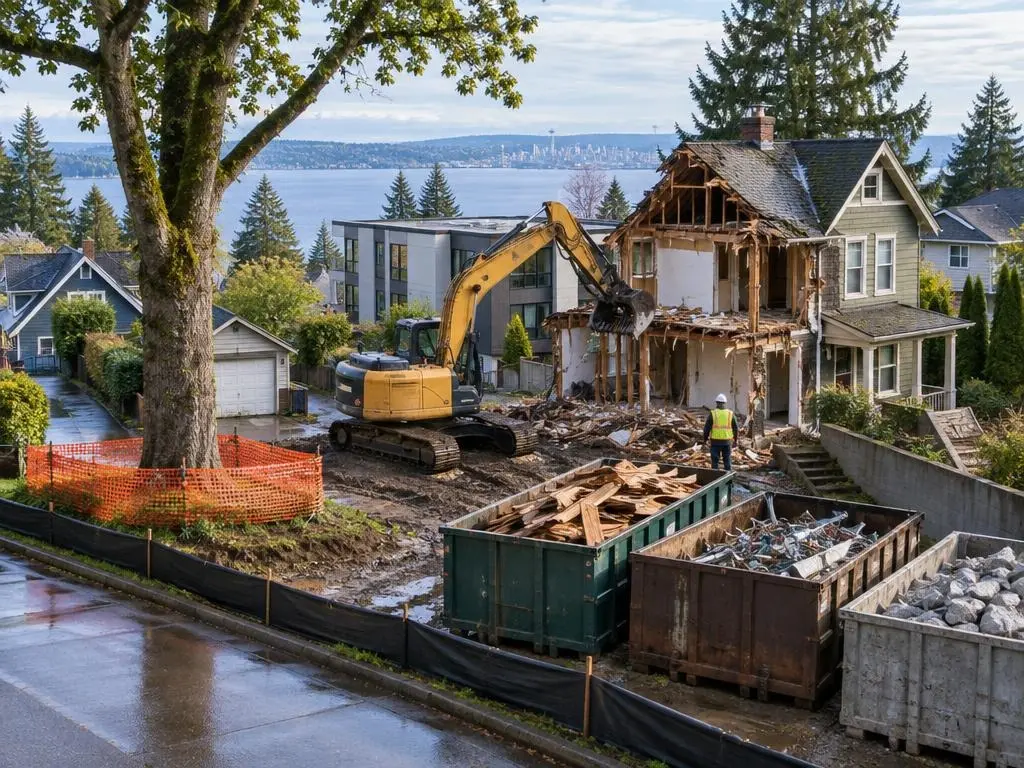
Deconstruction & Salvage Service Areas
- Demolition Contractors in Seattle, WA
- Demolition Contractors in Bellevue, WA
- Demolition Contractors in Redmond, WA
- Demolition Contractors in Kirkland, WA
- Demolition Contractors in Renton, WA
- Demolition Contractors in Kent, WA
- Demolition Contractors in Federal Way, WA
- Demolition Contractors in Shoreline, WA
- Demolition Contractors in Burien, WA
- Demolition Contractors in Lynnwood, WA
- Demolition Contractors in Edmonds, WA
- Demolition Contractors in Bothell, WA
- Demolition Contractors in Sammamish, WA
- Demolition Contractors in Issaquah, WA
- Demolition Contractors in Auburn, WA
- Demolition Contractors in Mercer Island, WA
- Demolition Contractors in Tukwila, WA
- Demolition Contractors in SeaTac, WA
- Demolition Contractors in Des Moines, WA
- Demolition Contractors in Mountlake Terrace, WA
- Demolition Contractors in Lake Forest Park, WA
- Demolition Contractors in Kenmore, WA
- Demolition Contractors in Woodinville, WA
- Demolition Contractors in Newcastle, WA
- Demolition Contractors in Mukilteo, WA
- Demolition Contractors in Everett, WA
Get a Deconstruction & Salvage Estimate
Free salvage walk and estimate for deconstruction in Seattle.